SNI 7617:2013 vs 2010 – Differences & Validity Status
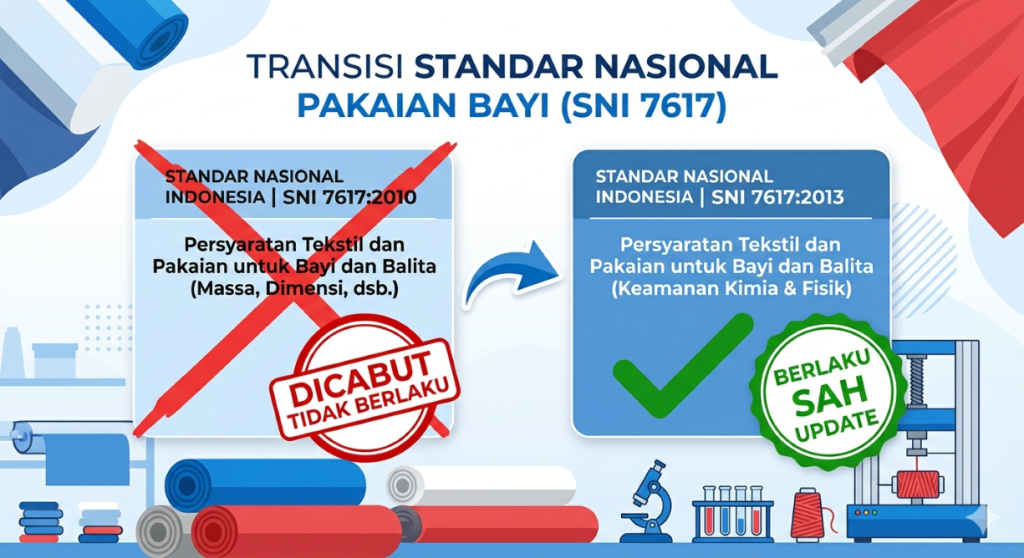
Difference between SNI 7617:2013 and SNI 7617:2010 are critical questions you must answer before beginning the textile product certification process. In short: BSN has revoked SNI 7617:2010, making it no longer valid. SNI 7617:2013 is the only valid version currently used as a certification reference.
But more than just a matter of status, the two also differ technically—from the list of prohibited aromatic amines, to the formaldehyde testing method, to the pesticide parameters newly introduced in the latest version. Understanding these differences is not only crucial for regulatory compliance but also determines whether your laboratory test results will pass or fail the certification evaluation.
This article thoroughly examines all of these differences, complete with practical implications for manufacturers, importers, and testing laboratories.
Why was SNI 7617:2010 revised to SNI 7617:2013?
SNI 7617 is the Indonesian National Standard that regulates the requirements for dyes and hazardous chemicals in textile products. This standard serves as a crucial legal basis because it covers three aspects:
- SNI certification is mandatory for textile products circulating in the Indonesian market.
- Technical requirements for importers of ready-made garments and fabrics
- Market supervision references by institutions such as BPSK and the Directorate of Supervision of Circulating Goods
BSN did not revise SNI 7617 solely for administrative reasons. Instead, two strong technical factors drove this update:
- International bodies such as ISO and EN are updating their post-2010 reference standards, as the European Union tightens REACH regulations for hazardous chemicals.
- The discovery of hazardous textile products in the domestic market indicates the need for tightening of several parameters, particularly aromatic amines and heavy metals.
As a result, SNI 7617:2013 is not just a newer version — it is a more comprehensive and technically rigorous standard.
Complete Comparison: SNI 7617:2013 vs SNI 7617:2010
The following table summarizes the key differences between the two standard versions side by side. Pay particular attention to the “Status” column—this is the most fundamental difference.
| Aspect | SNI 7617:2010 | SNI 7617:2013 |
| Publication Year | 2010 | 2013 |
| Status | Revoked — not valid | Valid (active) |
| Scope | Requirements for dyes and hazardous chemicals in textile products | Same, with technical revisions and adjustments |
| Normative Reference | ISO 14184-1, ISO 14184-2, EN 14362-1 (old edition) | Updated to the latest edition of the international standard |
| Formaldehyde Parameters | Limit values per category, old version of test method | Fixed limit values, updated test method (ISO 14184-1:2011) |
| Aromatic Amine Parameters | 21 forbidden amens (EN 14362-1:2003) | Expanded list, methods EN 14362-1:2012 & EN 14362-3 |
| pH parameters | Yes, per skin contact category | Yes, the tolerance limit is updated. |
| Color Fastness | Set, old edition ISO method | Set, test method reference updated |
| Heavy Metals (Cd, Pb, Cr, Ni) | Partially regulated | Reinforced and expanded in scope |
| Banned Pesticides | Not explicitly regulated | Starting to set (some compounds) |
| EU REACH Compliance | Partial | More aligned with the latest REACH regulations |
| Mandatory SNI Basis | No longer relevant | The legal basis for current mandatory SNI certification |
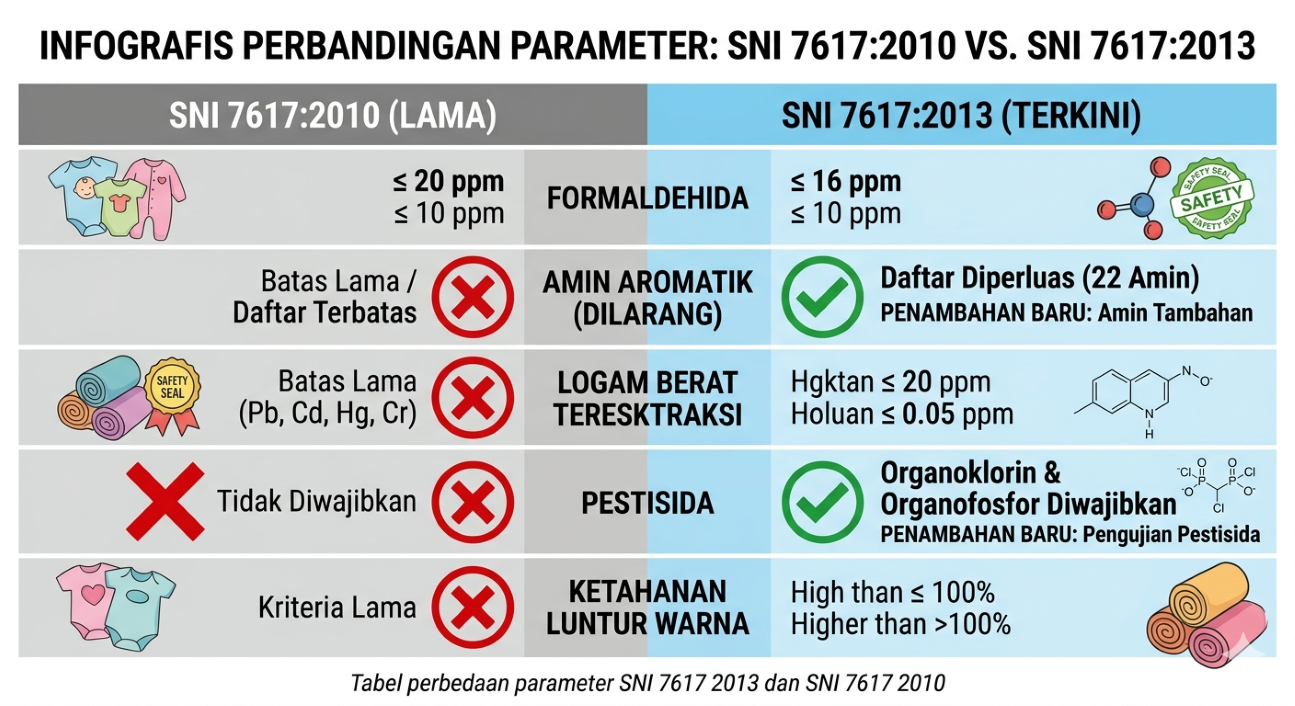
Technical Differences between SNI 7617:2013 vs 2010 Per Parameter
1. Formaldehyde — Same Limit Value, Different Test Method
Formaldehyde is the most sensitive parameter in SNI 7617 due to its direct impact on health, particularly for infants and children. Formaldehyde limit values remain consistent across both versions of the standard.
| Formaldehyde limit values apply in both versions: • Infant category (0–3 years): ≤ 20 mg/kg • Direct skin contact: ≤ 75 mg/kg • No direct contact: ≤ 300 mg/kg |
However, what has changed in SNI 7617:2013 is the reference to the test method. The 2013 version refers to ISO 14184-1:2011, while the 2010 version still uses the older ISO edition. Consequently, laboratories still using the older protocol are required to update their testing SOPs to ensure their results pass SNI 7617:2013 certification verification.
2. Aromatic Amines of Azo Dyes — The Most Variable Parameter
Aromatic amines are the most complex and most variable parameter. Chemically decomposing azo dyes can release carcinogenic aromatic amines—some of which have been shown to trigger bladder cancer with long-term exposure.
SNI 7617:2010 prohibits 21 aromatic amines based on EU Directive 2002/61/EC, with EN 14362-1:2003 as its standard test method.
In contrast, SNI 7617:2013 expands the list of prohibited amines and updates the test methods to EN 14362-1:2012 and EN 14362-3. This addition includes 4-aminoazobenzene — a compound that began to be included in the European Union's regulatory list after the 2010 version was published.
| IMPORTANT for testing labs: Tests using the EN 14362-1:2003 protocol (reference SNI 7617:2010) will not be accepted for SNI 7617:2013 certification purposes. Ensure your laboratory is using the updated method before applying for certification. |
3. Heavy Metals — Expanded Coverage
SNI 7617:2010 regulates the presence of heavy metals such as cadmium, lead, chromium, and nickel, but its scope is limited to certain dyes. The 2013 version significantly clarifies and expands this scope.
Specifically, the 2013 version added requirements for acid extracts that are more representative of human sweat conditions. This aspect is particularly relevant for underwear, sportswear, and children's clothing, which are in direct and prolonged contact with consumers' skin.
4. Color Fastness — Updated Method
Both versions of the standard regulate colorfastness to washing, perspiration, rubbing, and exposure to light. However, SNI 7617:2013 updates the applicable ISO method references. As a result, test conditions such as temperature, duration, and detergent type can be technically different—and these differences directly affect the final results of laboratory testing.
5. Pesticides — New Parameters Not Present in the 2010 Version
SNI 7617:2013 added pesticides as one of the most significant new parameters. Its predecessor, SNI 7617:2010, did not explicitly regulate pesticide compounds at all. The 2013 version now includes a number of prohibited pesticide compounds in response to global concerns about pesticide residues in cotton fibers and other natural materials.
The addition of these parameters has a direct impact on the testing process and certification costs, especially for producers who rely on cotton raw materials from sources that do not yet have organic certification.
SNI 7617:2013 vs 2010: Which is Applicable Now?
| ANSWER: SNI 7617:2013 is the only version currently in effect. SNI 7617:2010 has been officially revoked and can no longer be used as a reference for testing or certification. |
Three official sources confirm this status:
- The BSN SNI Information System Portal (sispk.bsn.go.id) lists SNI 7617:2010 as having the status “revoked”.
- The Minister of Trade's Regulation on Mandatory SNI explicitly refers to SNI 7617:2013 as a reference.
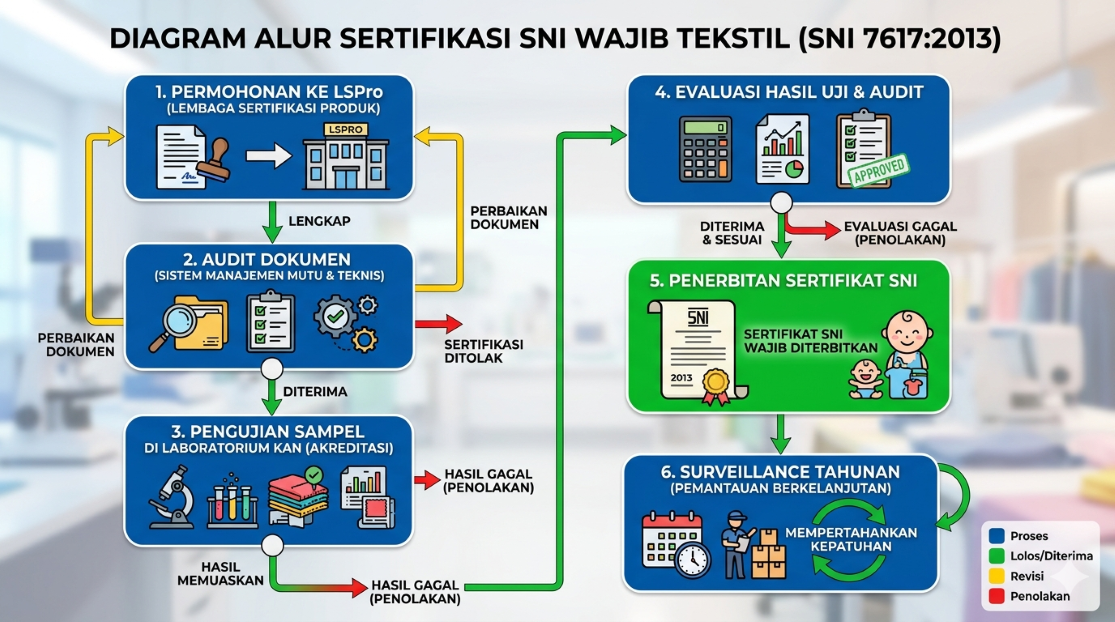
- The technical guidelines for KAN-accredited LSPro use SNI 7617:2013 as the basis for audits and evaluations.
Practical Implications: What Should You Do?
For Domestic Manufacturers
- Use SNI 7617:2013 as the sole reference in all product testing — not the 2010 version
- Check the KAN accreditation status of your testing laboratory, particularly for test methods relevant to the 2013 version.
- If you have ever received a certificate based on SNI 7617:2010, immediately re-certify it — the old certificate has been legally invalidated.
For Importers and Suppliers
- Request technical documents (Technical Data Sheet, Certificate of Analysis) from the supplier that include testing according to SNI 7617:2013.
- Be aware that customs and market inspectors will reject test results that only refer to SNI 7617:2010.
- For products from China, Türkiye, or Bangladesh, educate your suppliers about these parameter differences — not all overseas manufacturers are familiar with the latest SNI updates.
For Testing Laboratory
- Ensure that the scope of your KAN accreditation covers the complete parameters of SNI 7617:2013.
- Urgently update internal test protocols, especially for aromatic amines (EN 14362-1:2012) and formaldehyde (ISO 14184-1:2011)
- Actively communicate to clients that test results are in accordance with SNI 7617:2013 — this streamlines their certification process.
FAQ: Frequently Asked Technical Questions
Q: Is there a newer version of SNI 7617 than 2013?
As of the latest information, SNI 7617:2013 is still the active version. However, BSN periodically reviews the standard. Therefore, it is highly recommended to always verify the current status through the official BSN portal before beginning the certification process.
Q: Do products that meet OEKO-TEX Standard 100 automatically pass SNI 7617:2013?
It's not automatic, although there are significant differences. The OEKO-TEX 100 standard is generally stricter in some parameters, so products that meet it are usually more likely to meet SNI 7617:2013. However, verification is still necessary, as the two have different specific testing methods.
Q: Can test results from foreign laboratories be used for SNI certification?
Yes, under two conditions: first, the laboratory must be ISO/IEC 17025 accredited; and second, KAN and the relevant country's accreditation body must have signed a Mutual Recognition Arrangement (MRA). However, some LSPros require additional testing confirmation at a domestic laboratory partnering with KAN.
Q: How long is the SNI 7617:2013 certificate valid?
SNI certification for textile products is generally valid for three years. LSPro will conduct annual surveillance. If there are significant changes to the product formula, raw material suppliers, or production process, LSPro may request additional audits before the expiration date.
Official References and Sources
For self-verification, you can access the following official sources:
- BSN official portal for SNI status: sispk.bsn.go.id — search for “SNI 7617” to see the status of the 2010 and 2013 versions.
- KAN laboratory accreditation information: kan.or.id — directory of ISO/IEC 17025 accredited laboratories that can be used for SNI 7617:2013 testing.
- Ministry of Trade's Mandatory SNI notification system: siinas.kemendag.go.id — to check products that fall into the Mandatory SNI category.
Conclusion: SNI 7617:2013 is the Standard You Must Use
Difference between SNI 7617:2013 and SNI 7617:2010 It's not just a matter of the year. They differ substantially—from a longer list of aromatic amines, to more sophisticated testing methods, to entirely new pesticide parameters.
Moreover, the difference in validity status is absolute. Manufacturers or importers who continue to use SNI 7617:2010 as a reference—whether for testing or certification—run serious risks: product rejection in the market or the loss of their existing certifications.
So, make sure your entire certification ecosystem — from laboratory selection, technical document preparation, to coordination with LSPro — fully complies with SNI 7617:2013.
| Need technical assistance for SNI 7617:2013 certification? Our team will assist you with everything from document readiness audits and laboratory testing coordination to certificate issuance. Contact us for a free initial consultation. |